
The official match ball of the 2026 World Cup: Adidas Trionda
The official match ball of the 2026 World Cup was designed by Adidas and is named Trionda. Discover all the features of the World Cup ball.
The build-up to the 2026 World Cup reaches a new peak with the presentation of the Trionda, the official match ball of the tournament. This article explores the meaning behind the name Trionda, explains the advanced technology behind the ball, and takes a closer look at its striking design. It also highlights the importance of this unveiling for the upcoming World Cup.
Table of contents [hide]
? min. reading time | ? words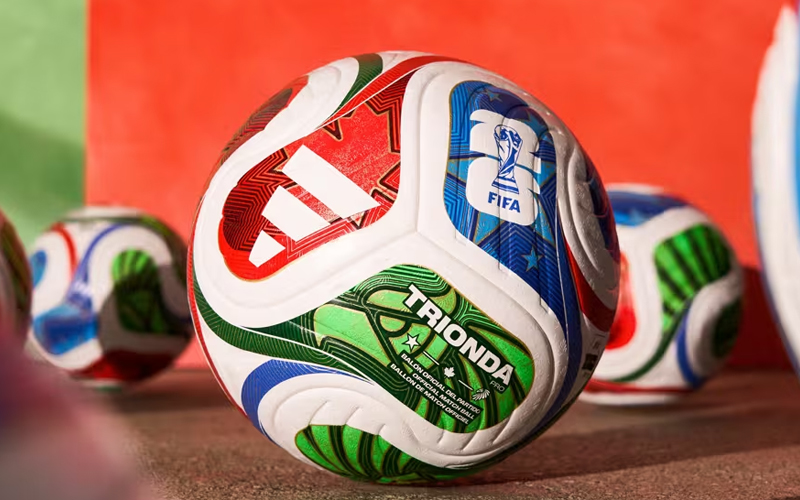
The name Trionda and its meaning
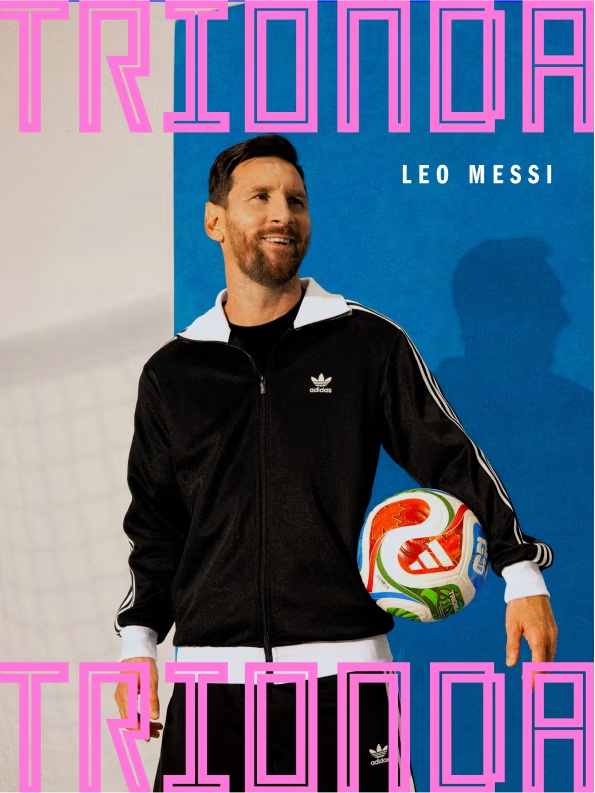
The name Trionda is derived from the Spanish word for “three waves” [ref]. This reference symbolizes the collaboration between the three host nations: Canada, Mexico, and the United States. For the first time in history, the FIFA World Cup will be organized by three countries uniting to create one grand tournament.
The three waves in the name stand for motion, unity, and energy – three core concepts that perfectly fit the world’s greatest football event. Just like waves that merge into a single rhythm, Trionda emphasizes the cooperation between the host nations and the power of football to connect across borders.
The name not only reflects geographical collaboration but also the dynamics of the modern game. The ball is designed for speed, precision, and balance – qualities every top-level player needs. Thus, the Trionda forms both the symbolic and functional core of the World Cup.
Technology and performance: a new standard in precision
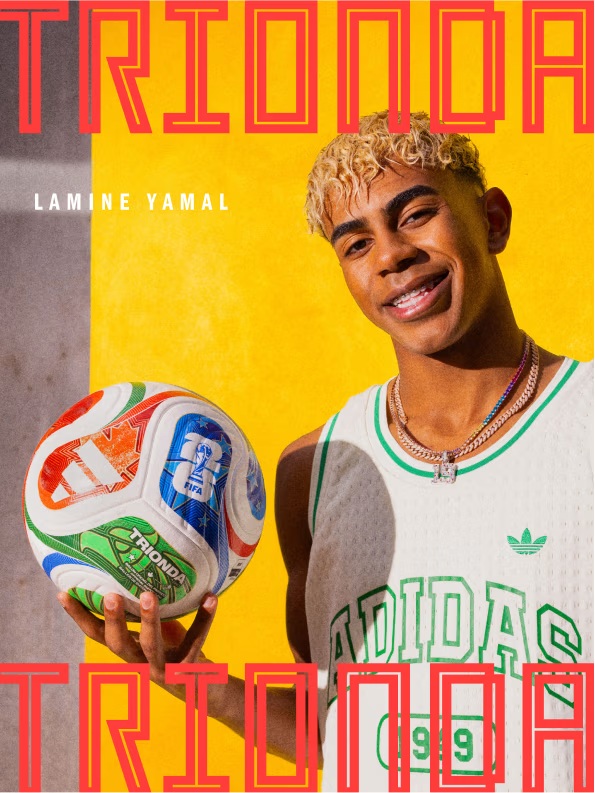
The Trionda is not just any ball, but a technological masterpiece from Adidas. The manufacturer once again demonstrates that innovation and craftsmanship can go hand in hand.
The match ball features a renewed four-panel construction with deeper seams. This design ensures greater stability in the air, making the ball’s movement more predictable during passes, shots, and crosses. Players gain maximum control regardless of weather conditions.
A standout feature is the integrated connected ball technology. This system includes an advanced sensor that records movements at a frequency of 500 Hz. Every rotation, acceleration, and direction of the ball is transmitted in real time to the VAR system. This helps referees make crucial decisions, such as determining offside moments or the exact point of contact.
The benefits of this technology include:
- Improved decisions through real-time data analysis.
- Higher accuracy in evaluating match situations.
- Greater transparency for players, coaches, and fans.
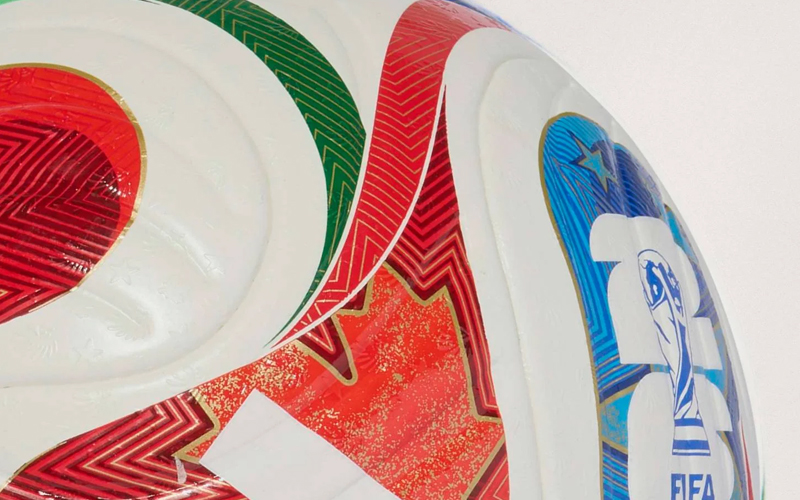
Additionally, the surface of the Trionda features subtle embossed icons that enhance grip. Even in rain or high humidity, the ball maintains a stable feel. This not only increases control for players but also improves durability during intense matches.
Design and colors: a tribute to three host nations
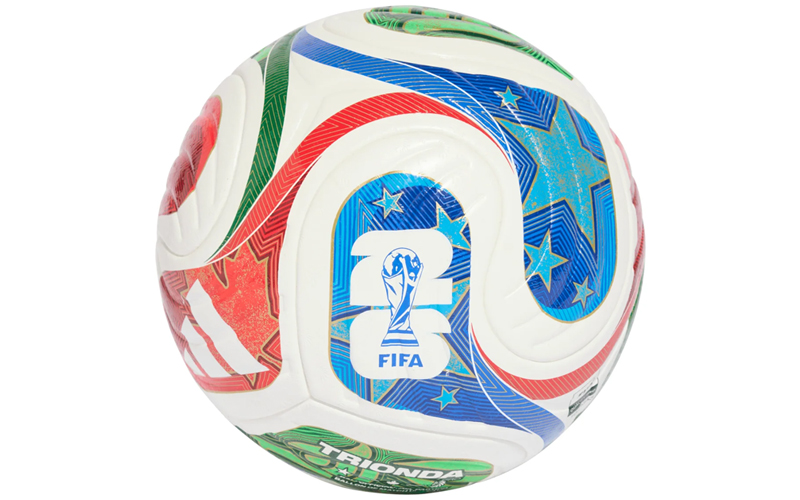
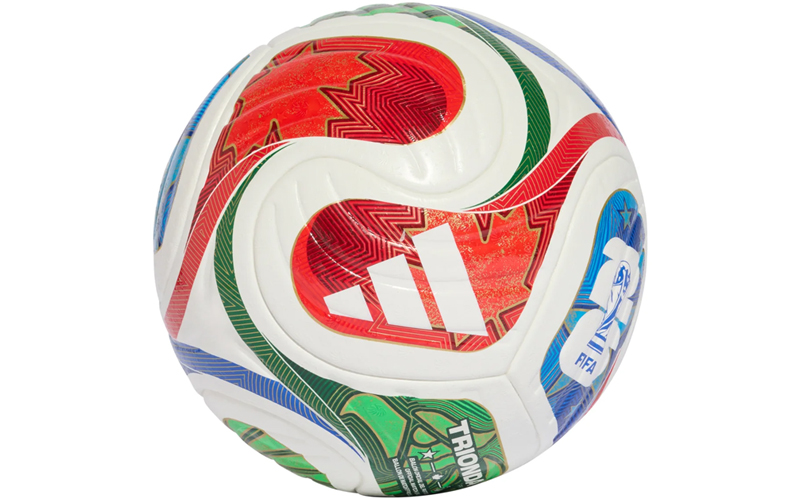
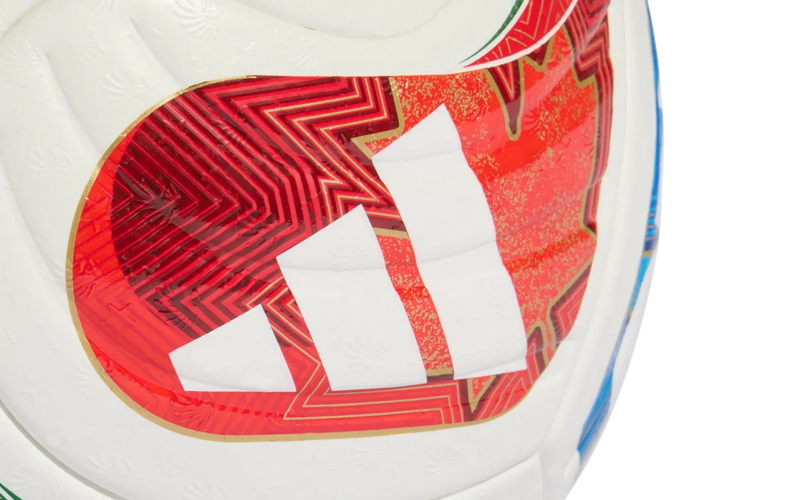
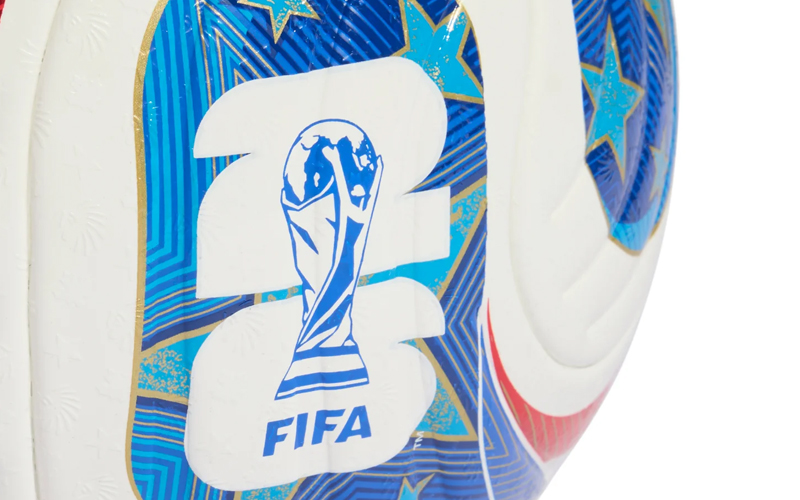
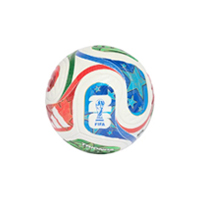
The design of the Trionda is as symbolic as it is functional. The colors red, green, and blue represent the three host countries:
- Red for Canada, featuring the iconic maple leaf.
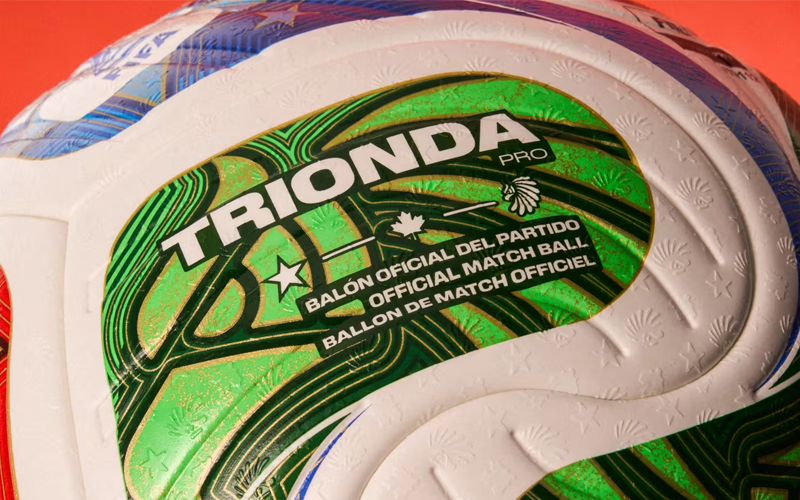
- Green for Mexico, represented by the eagle.
- Blue for the United States, symbolized by a star.
These three colors flow together in a pattern resembling waves, echoing the meaning of the name. At the center of the ball, the structure forms a triangle – a subtle reference to the historic partnership between the three nations.
Golden accents highlight the grandeur of the tournament and reference the World Cup trophy. Every detail is carefully crafted to make a visual impression while reflecting the cultural diversity and shared pride of the host nations.
The design also captures the essence of modern sports culture: a fusion of tradition, innovation, and identity. Through color, form, and symbolism, the Trionda visually brings the unity of the 2026 World Cup to life. [ref]
The presentation and importance of the launch
The official unveiling of the Adidas Trionda marks a key milestone in the lead-up to the 2026 World Cup. This launch follows other major events such as the announcement of the mascots and the first ticket sales phases.
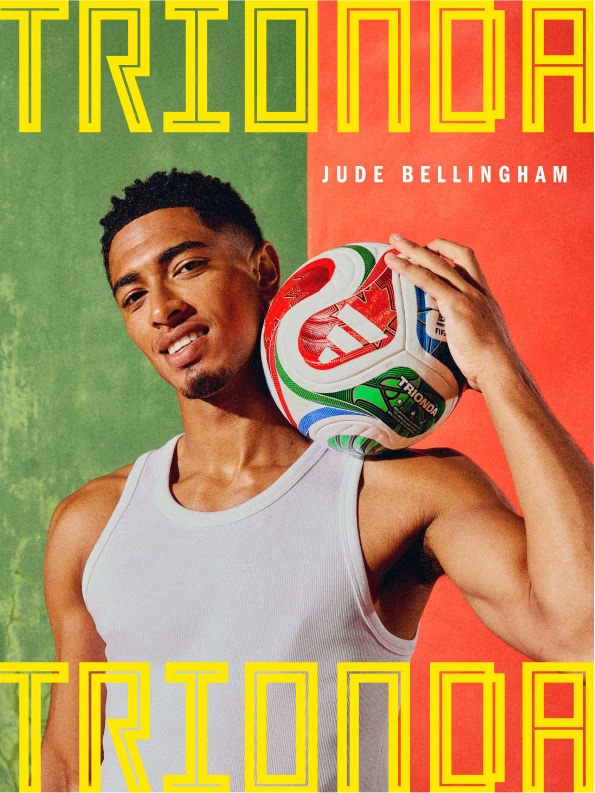
According to the organizers, the Trionda not only symbolizes the start of the tournament but also the shared ambition of three nations to host the world’s greatest sporting event. The ball was revealed in a colorful global campaign focused on unity, progress, and innovation.
The presentation took place ahead of the final qualifying matches and the tournament draw, contributing to the growing excitement and anticipation among football fans around the world.
The Trionda is more than a match ball – it is a symbol of a new era for international football. The combination of cutting-edge technology, cultural design, and sustainable materials makes it a tangible representation of the future of the game.
The significance of the Trionda for the World Cup
With the introduction of the Trionda, Adidas has once again proven that innovation plays a central role in the evolution of modern football. The ball is designed not only to enhance performance but also to convey a message of cooperation and respect.
The technology within the Trionda strengthens trust in fair decisions and promotes sporting integrity. At the same time, its design highlights the power of football to connect cultures, break boundaries, and unite people.
The 2026 World Cup promises to be a tournament where tradition and technology meet. The Trionda stands at the heart of this new chapter – a ball that is not only played with but also tells a story of collaboration, innovation, and passion for the game.
All the balls of the World Cup football
These are all the balls from the 1930 World Cup:
Match ball World Cup 1930
Host country: Uruguay
Name: T-Model
The so-called T-model featured eleven T-shaped, hand-stitched leather strips. This ball was used in part of the matches, partly because it had already served at the 1924 Paris and 1928 Amsterdam Games. For the first World Cup final, the captains did not agree on a single ball: Argentina used the Tiento (12 long panels) in the first half, and Uruguay used the T-model in the second. Argentina led 2–1 at half-time, but Uruguay turned it around to 4–2 with three goals after the break using the T-model.
Match ball World Cup 1934
Host country: Italy
Name: Federale
The Federale 102, produced in Italy, was one of several balls used during the tournament; captains could choose. It had 13 leather panels and an opening stitched with cotton thread, making headers more comfortable. The British-made Globe and Zig-Zag also appeared; the latter, related to the T-model, was used in the final, which Italy won 2–1 after extra time against Czechoslovakia.
Match ball World Cup 1938
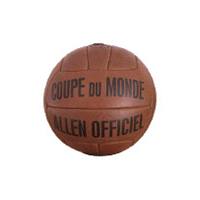
Host country: France
Name: French Allen
Like all official balls between 1934 and 1966, the Allen was manufactured in the host nation. Match balls carried no branding, but for the final a logoed example was placed in the centre circle for promotion. The Allen had 13 panels and cotton stitching, similar to the Federale 102, and had previously been used at the 1924 Paris Games.
Match ball World Cup 1950
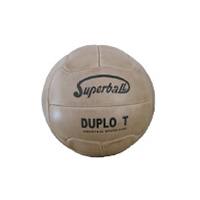
Host country: Brazil
Name: Tossolini Superball
Although “Indústria Brasileira” was printed on the ball, the design derived from Argentina’s Superval Doble T. After the war the makers opened a Brazilian branch and supplied the official match ball, renamed Superball Duplo T. It was the first World Cup ball without laces, with a valve in one of the twelve identical leather strips, creating a rounder, more uniform and better sealed surface and greater durability.
Match ball World Cup 1954
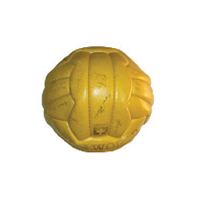
Host country: Switzerland
Name: Swiss Zig-Zag
Made from greased leather, this ball had a light yellow hue, improving visibility compared to typical dark brown balls. That proved useful in the wet, muddy final where West Germany shocked Hungary 3–2. With waterproof leather not yet available, the ball absorbed water and grew heavier. The 18 long leather pieces, arranged in rows of three with jagged edges, remain a reference for designers.
Match ball World Cup 1958
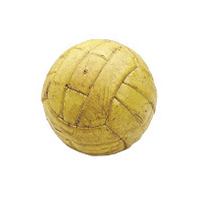
Host country: Sweden
Name: Top Star
FIFA ran a selection from 102 anonymous entries; number 55, the Top Star, won. The ball came in yellow, light brown and white; the white version, with 24 leather strips and a wax coating against moisture, was used most often, including the final where a young Pelé led Brazil to victory. The Top Star also suited Just Fontaine perfectly, as he scored 13 goals – a record still standing.
Match ball World Cup 1962
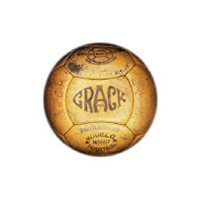
Host country: Chili
Name: The Crack
Mr Crack used 18 strips with rounder panel shapes, making the ball appear more spherical. It was the first World Cup ball with a latex valve, helping it retain shape longer. Adidas later paid tribute with the “Santiago”. Due to water absorption, some European teams occasionally chose alternatives such as the Top Star, including in the Czechoslovakia–Hungary quarter-final.
Match ball World Cup 1966
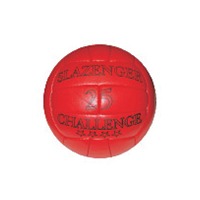
Host country: England
Name: Slazenger Ball
More than a hundred anonymous balls were tested in England for circumference, roundness, weight, pressure loss and rebound. Slazenger won with the 25-panel Challenge 4-Star in white, yellow and orange. The white version saw most use, but the orange ball became iconic in the England–West Germany final, where Geoff Hurst’s hat-trick sealed a 4–2 victory after extra time.
Match ball World Cup 1970
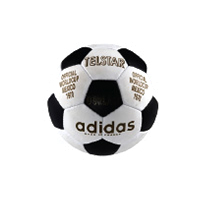
Host country: Mexico
Name: Telstar
Adidas became the official supplier and introduced the Telstar: 32 panels, 12 black pentagons and 20 white hexagons, the blueprint for the football’s global image. The name referenced the satellite enabling live television. Match balls used in North America bore neither logo nor name; orange versions also existed. Brazil won a tournament the world could follow live.
Match ball World Cup 1974
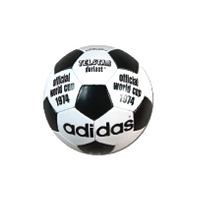
Host country: Germany
Name: Durlast
The Telstar received a Durlast coating against water and mud. Adidas supplied two variants: the white Chile Durlast for floodlit games and the orange Apollo Durlast for snowy conditions; in the end, the white one sufficed. Unlike 1970, branded balls were now used, showing the name, manufacturer and “Official World Cup 1974”.
Match ball World Cup 1978
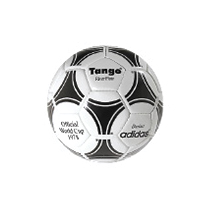
Host country: Argentina
Name: Tango
Named after the famed dance, the Tango introduced the signature curved triads that defined five subsequent World Cups. Hand-stitched in France and coated with Durlast, it suited a tournament where Argentina beat the Netherlands 3–1 after extra time.
Match ball World Cup 1982
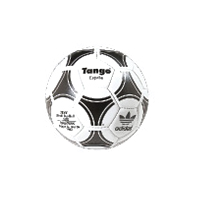
Host country: Spain
Name: Tango Espana
Adidas refined the design with 20 black triads forming 12 circles. The Durlast coating gave way to polyurethane with extra seam protection. Decades later UEFA honoured this icon with the “Tango 12” for EURO 2012, a clear nod to the Spanish original.
Match ball World Cup 1986
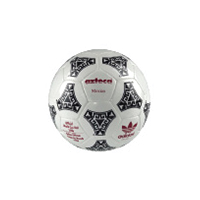
Host country: Mexico
Name: Azteca
The Azteca referenced pre-Columbian culture with triads inspired by architecture and murals. It was the first fully synthetic World Cup ball, made in France, minimising water uptake and increasing durability. The familiar Tango framework remained, enhanced with a local artistic touch.
Match ball World Cup 1990
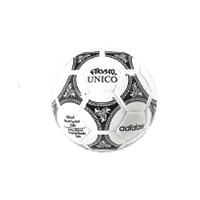
Host country: Italy
Name: Etrusco
The Etrusco Unico continued the 1982 line and honoured Etruscan culture. Each triad featured three lions’ heads with open mouths, a classic motif. The ball returned as the official match ball for EURO 1992 in Sweden and the Barcelona Olympics the same year.
Match ball World Cup 1994
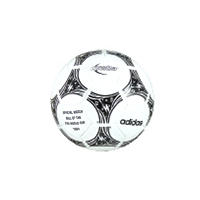
Host country: United States
Name: Questra
Inspired by U.S. space exploration, the triads depicted planets, stars and rockets. The construction with 12 pentagons and 20 hexagons stayed familiar. The U.S. journey ended in the Round of 16 against Brazil, who later lifted the trophy after a shootout versus Italy.
Match ball World Cup 1998
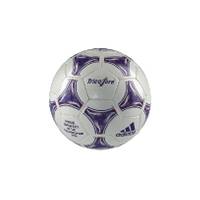
Host country: France
Name: Tricolore
The Tricolore was Adidas’s first multi-coloured World Cup ball and the first with syntactic foam. Triads in blue, white and red referenced the French flag and showed three cockerels; the red comb echoed the Adidas logo. Gas-filled micro-balls boosted speed and energy return, a technology still in use.
Match ball World Cup 2002
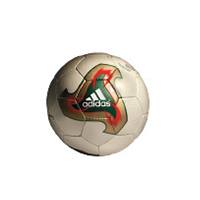
Host country: South Korea and Japan
Name: Fevemova
The Fevernova broke with Tango tradition, adopting four trigons on the familiar panels. Hand-stitched, it used improved syntactic foam for extra cushioning and precision. The trigons represented wind turbines, celebrating alternative energy sources.
Match ball World Cup 2006
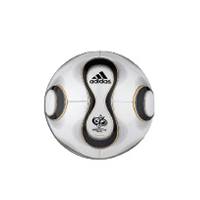
Host country: Germany
Name: Teamgeist
The Teamgeist approached a perfect sphere with a new thermally bonded 14-panel construction. Black and white referenced Germany, with gold lines linking visually to the World Cup trophy. A gold Teamgeist Berlin was produced for the final, and for the first time each ball carried the teams, stadium, city, date and kick-off time.
Match ball World Cup 2010
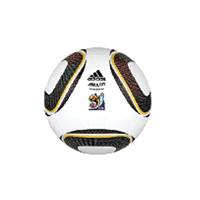
Host country: South Africa
Name: Jabulani
Jabulani means “to celebrate” in Zulu and appeared in 11 colours: for team size, official languages and the originally planned host cities. Eight thermally bonded 3D panels with a “grip ’n groove” texture aimed for control in all conditions. The final used a special gold edition: the Jo’bulani, named after Johannesburg.
Match ball World Cup 2014
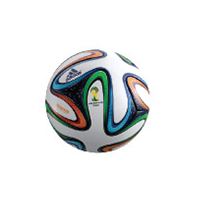
Host country: Brazil
Name: Brazuca
The Brazuca underwent the most rigorous testing ever, with hundreds of professionals and many research teams. Six identical, propeller-shaped panels and a new surface improved aerodynamics, stability and touch. Fans chose the name; the colourful lines referenced Brazilian wish bracelets. For the final, the Brazuca Final Rio featured gold accents.
Match ball World Cup 2018
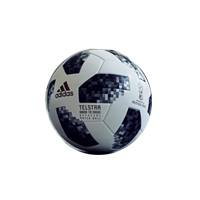
Host country: Russia
Name: Telstar
The Telstar 18 fused past and future: a pixel motif honoured the 1970 Telstar, while an embedded NFC chip enabled smartphone interaction. Six textured, seamlessly bonded panels offered accuracy and low water absorption. In the knockouts, the red Telstar Mechta was used, Russian for “dream” or “ambition”.
Match ball World Cup 2022
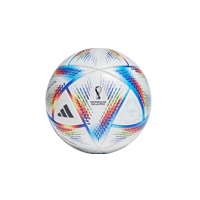
Host country: Qatar
Name: Al Rihla
Al Rihla (“the journey”) was Adidas’s 14th consecutive World Cup ball and the fastest in flight. Its design drew on Qatari culture, architecture, dhow boats and the flag. With “Connected Ball” tech it helped officials make quicker, more accurate calls, especially on offside. A CRT core and Speedshell skin with 20 panels improved accuracy, stability and swerve. For the semi-finals and final, Al Hilm (“the dream”) appeared with a gold base.
Match ball World Cup 2022
Host country: Canada, USA and Mexico
Name: Trionda
On 2 October 2025 Adidas unveiled Trionda as the official match ball. The name means “three waves”, and the vivid red, green and blue palette honours the three hosts. A new four-panel construction with fluid geometry brings the wave motif to life; deep seams ensure even drag and stable flight. Close-up embossed icons enhance grip when striking or dribbling in wet or humid conditions. Symbols for each host – maple leaf, eagle and star – plus gold details nod to the World Cup trophy.
References
[hide]Share
Share this message via social media with your family, friends and colleagues!
The official match ball for the 2026 World Cup is designed by Adidas. Discover all the features of the World Cup ball.
About the author

Author of this content is Patrick. I have been playing soccer for more than 25 years and follow the daily news closely. My hobbies include playing football, running and maintaining various websites, in addition to my job as a financial professional.
I do not work for any related company or institution, so the information is reliable and independent. The information has been collected accurately from reliable sources and is regularly updated.