
World Cup 2026 Draw: Result, Seedings and Procedure
The draw for the 2026 World Cup will take place on 5 December in Washington, D.C. Discover how the 48 nations will be divided across 12 groups. Read about the procedure and view the seedings for the World Cup draw.
England has been drawn into Group L, alongside Croatia, Ghana and Panama.
The 2026 World Cup draw marks the first time that all 48 participants will come together, with millions of eyes watching them. After the draw, the teams will know who they face on the road to the final on 19 July 2026.
The official draw for the 2026 World Cup will be held on Friday, 5 December 2025 at the prestigious John F. Kennedy Center for the Performing Arts in Washington, D.C. During this special event, it will be determined how the 48 participating nations will be allocated to 12 groups, writing a new chapter in football history.
Table of contents [hide]
? min. reading time | ? wordsFIFA assigns teams for the final draw of the FIFA World Cup according to the ranking of the teams within the FIFA/Coca-Cola Men's World Ranking. FIFA distributes the teams into groups through public placement and drawing, taking into account geographical and sporting considerations. The three host nations – Mexico, Canada and the United States – are preassigned to positions A1 (Mexico), B1 (Canada) and D1 (USA) in the match schedule previously established by FIFA.
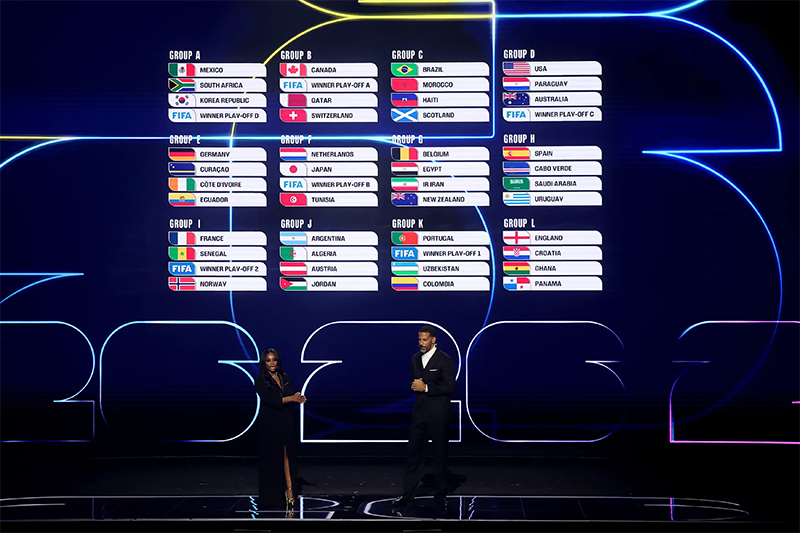
Result of the World Cup 2026 Draw
This is the result of the 2026 World Cup draw: [ref]
- Mexico, South Africa, South Korea, UEFA play-offs D
- Canada, UEFA play-offs A, Qatar, Switzerland
- Brazil, Morocco, Haiti, Scotland
- United States, Paraguay, Australia, UEFA play-offs C
- Germany, Curaçao, Ivory Coast, Ecuador
- Netherlands, Japan, UEFA play-offs B, Tunisia
- Belgium, Egypt, Iran, New Zealand
- Spain, Cape Verde, Saudi Arabia, Uruguay
- France, Senegal, FIFA play-offs 2, Norway
- Argentina, Algeria, Austria, Jordan
- Portugal, FIFA play-offs 1, Uzbekistan, Colombia
- England, Croatia, Ghana, Panama
Placeholders for the play-offs
During the draw, the outcomes of the play-offs were not yet known. That is why so-called placeholders are shown on the slips in the balls.
European play-offs (UEFA):
- UEFA play-offs A: Wales/Bosnia and Herzegovina vs. Italy/Northern Ireland
- UEFA play-offs B: Ukraine/Sweden vs. Poland/Albania
- UEFA play-offs C: Slovakia/Kosovo vs. Türkiye/Romania
- UEFA play-offs D: Czechia/Republic of Ireland vs. Denmark/North Macedonia
Intercontinental play-offs (FIFA):
- FIFA play-offs 1: New Caledonia/Jamaica vs. DR Congo
- FIFA play-offs 2: Bolivia/Suriname vs. Iraq
When is the World Cup Draw?
The draw starts on Friday, 5 December 2025 at 5:00 p.m. CET (12:00 p.m. local time) and will be broadcast live worldwide by FIFA’s official media partners.
All around the world – from Toronto to Mexico City, and New York to Vancouver – fans will be watching eagerly as the 48 nations receive their place in the tournament.
Where is the World Cup 2026 Draw?
The draw for the 2026 FIFA World Cup marks an important moment in the build-up to the world’s largest sporting event. For the first time, the ceremony will take place in the heart of the U.S. capital, Washington, D.C., at a location known worldwide for its cultural significance.
The Kennedy Center, attracting millions of visitors annually, serves as the national cultural center of the United States and a living tribute to President John F. Kennedy. In December, it will provide the backdrop for a unique football moment, with the coveted World Cup trophy at the center as nations discover their group-stage opponents.

On the Road to the Biggest World Cup Ever
According to FIFA President Gianni Infantino, the draw promises to be one of the most memorable moments in the build-up to the 2026 World Cup: “The ceremony in Washington, D.C. marks an important milestone on the way to the biggest tournament in football history. We look forward to welcoming representatives of all 48 nations, our partners, media and fans from the 16 host cities to the capital of the United States.”
Seedings for the World Cup Draw
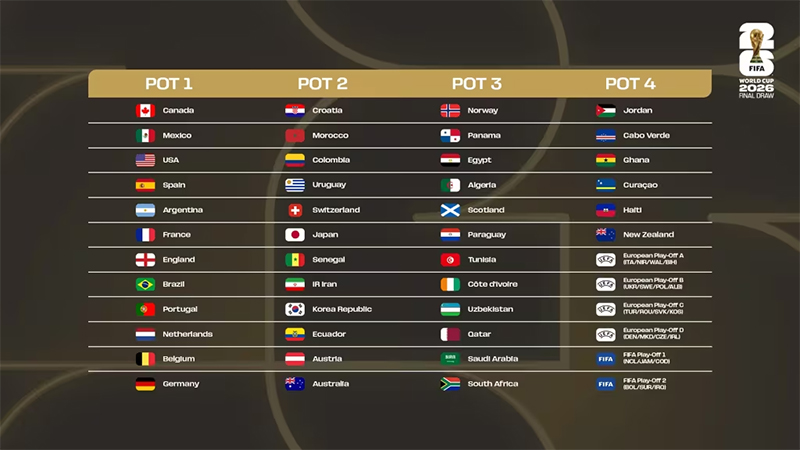
The seedings for the World Cup draw consist of four pots with 12 teams each. Host nations Canada, the USA and Mexico are placed in Pot 1. England is also placed in Pot 1, avoiding other strong football nations. [ref]
Besides the three host nations, the remaining 39 qualified teams are placed in the pots based on the FIFA World Ranking of 19 November 2025. Pot 4 includes six placeholders; two spots for the winners of the play-offs and four spots for the European World Cup play-offs.
Six of the 48 participants in the 2026 World Cup are not yet known and will be determined in March 2026. [ref] Four tickets come from the UEFA play-offs, involving sixteen teams: Albania, Bosnia and Herzegovina, Czech Republic, Denmark, Italy, Kosovo, Northern Ireland, Macedonia, Poland, Ireland, Romania, Slovakia, Sweden, Turkey, Ukraine and Wales. The remaining two places are awarded via the FIFA play-off tournament, featuring six nations: Bolivia, Congo, Iraq, Jamaica, New Caledonia and Suriname.
Based on the ranking, the nine highest-ranked countries are placed in Pot 1 together with the three host nations. The next twelve nations enter Pot 2, followed by twelve teams in Pot 3. Pot 4 will consist of the following six ranked nations, supplemented by six placeholders from the FIFA and European play-offs, scheduled during the international match window from 23 to 31 March 2026.
| Pot 1 |
|---|
 Canada Canada |
 Mexico Mexico |
 United States United States |
 Spain Spain |
 Argentina Argentina |
 France France |
 England England |
 Brazil Brazil |
 Portugal Portugal |
 Netherlands Netherlands |
 Belgium Belgium |
 Germany Germany |
| Pot 2 |
|---|
 Croatia Croatia |
 Morocco Morocco |
 Colombia Colombia |
 Uruguay Uruguay |
 Switzerland Switzerland |
 Japan Japan |
 Senegal Senegal |
 Iran Iran |
 South Korea South Korea |
 Ecuador Ecuador |
 Austria Austria |
 Australia Australia |
| Pot 3 |
|---|
 Norway Norway |
 Panama Panama |
 Egypt Egypt |
 Algeria Algeria |
 Scotland Scotland |
 Paraguay Paraguay |
 Tunisia Tunisia |
 Ivory Coast Ivory Coast |
 Uzbekistan Uzbekistan |
 Qatar Qatar |
 Saudi Arabia Saudi Arabia |
 South Africa South Africa |
| Pot 4 |
|---|
 Jordan Jordan |
 Cape Verde Cape Verde |
 Ghana Ghana |
 Curaçao Curaçao |
 Haiti Haiti |
 New Zealand New Zealand |
 UEFA play-off A UEFA play-off A |
| UEFA play-off B |
| UEFA play-off C |
| UEFA play-off D |
| FIFA play-off 1 |
| FIFA play-off 2 |
Below is the seeding listed once again.
- Pot 1: Canada, Mexico, United States, Spain, Argentina, France, England, Brazil, Portugal, Netherlands, Belgium, Germany
- Pot 2: Croatia, Morocco, Colombia, Uruguay, Switzerland, Japan, Senegal, Iran, South Korea, Ecuador, Austria, Australia
- Pot 3: Norway, Panama, Egypt, Algeria, Scotland, Paraguay, Tunisia, Ivory Coast, Uzbekistan, Qatar, Saudi Arabia, South Africa
- Pot 4: Jordan, Cape Verde, Ghana, Curaçao, Haiti, New Zealand, European play-off A–D, FIFA play-off tournament 1 and 2
The draw starts with all teams in Pot 1, which are assigned to Groups A through L. Then follow Pot 2, Pot 3 and Pot 4 respectively.
Procedure of the 2026 World Cup Draw
The following principles for the draw were established to ensure a balanced competition, both in the group stage and – depending on sporting results – in the knockout stage, while maintaining as much random character as possible. The information below describes how the draw works. [ref]
Special arrangements apply to Canada, Mexico and the United States in Pot 1 because they are host nations. They receive balls in different colors and are immediately assigned to a fixed position: Mexico to A1 (green ball), Canada to B1 (red ball) and the United States to D1 (blue ball), as laid out in the fixture list of 4 February 2024.
The other nine highest-ranked teams in Pot 1 receive balls in the same color (white balls) and automatically take position 1 in the group they are drawn into.
How the 2026 World Cup Draw Works
- The four pots with teams are labeled 1 to 4. Each pot contains 12 balls with the name of each qualified nation.
- The draw begins with the three host nations. First the green ball representing Mexico is drawn. Mexico is placed in Group A as A1. Next the red ball for Canada is drawn, placing Canada in Group B as B1. Then the blue ball for the United States is drawn, placing them in Group D as D1.
- After the host nations have been drawn, the remaining nine teams from Pot 1 are drawn one by one.
- Once all teams from Pot 1 have been assigned to a group, the draw continues with Pot 2, then Pot 3, and finally Pot 4. Each pot is emptied completely before the next one begins.
- The draw ends once all teams from Pot 4 have been assigned to a group.
Competitive Balance Through Two Separate Paths
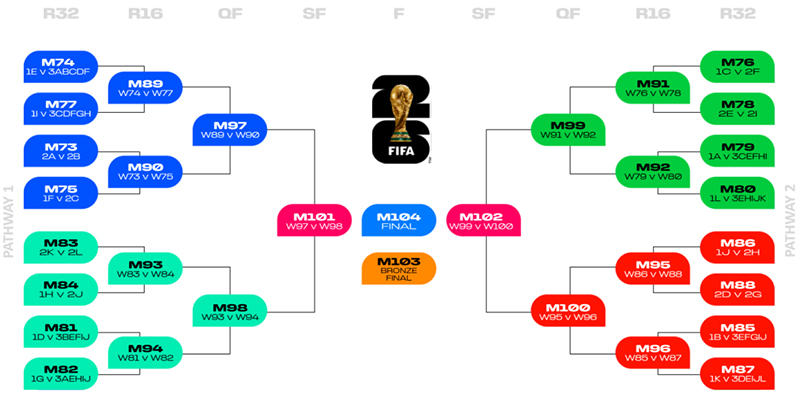
To ensure competitive balance, two separate paths to the semi-finals were created when designing the match schedule. The top four ranked countries in the FIFA ranking face specific restrictions: the top-ranked nation (Spain) and second-ranked (Argentina) are randomly assigned to opposite paths. This means that the two best teams cannot meet before the final, provided they win their groups. The same applies to third-ranked (France) and fourth-ranked (England), ensuring that the top four football nations could only meet in the semi-finals.
Below are the two separate paths, which clearly show that the top two and the third and fourth-ranked are separated.
For Pots 2, 3 and 4, the group position is determined by a pre-established allocation method. This allocation is shown below. The position within the group depends on the pot from which the team comes and the group it is drawn into.

Restrictions in the World Cup Draw
In principle, no more than one team from the same confederation may be drawn into the same group. This rule applies to all confederations except UEFA, which provides 16 teams. Each group must contain at least one and no more than two European teams. Therefore, four of the twelve groups will contain two of the sixteen UEFA teams (including the four play-off placeholders).
For the two FIFA play-off places, to comply with the principle that no more than one team from the same confederation may be in a group, the confederation restriction is applied to all three teams within each route of the two play-off spots in Pot 4.
The FIFA play-off tournament for the 2026 World Cup will consist of two routes to determine which teams win the final two World Cup spots. Each route consists of three teams, with only one team per route being seeded. Each route is composed of teams from three different continental confederations, and no route may contain more than one team from the same confederation.
To comply with FIFA’s general principle that a group may include a maximum of one team from the same confederation, this confederation restriction is applied to all three teams within each route of the two play-off placeholders in Pot 4.
Proposed Host Cities for the Draw
The 2026 World Cup draw ushers in a new phase of tournament preparations. The tournament will be played in the summer of 2026 in Canada, Mexico and the United States. The final will take place at the New York New Jersey Stadium on Sunday, 19 July 2026.
United 2026 originally proposed the San Francisco Bay Area and Los Angeles as hosts of the draw for the World Cup 2026. Both cities have state-of-the-art facilities that will attract worldwide attention.
The cities proposed for the draw have large international airports, ensuring easy travel for all visitors to the venues.
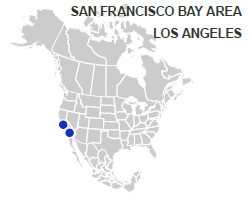
The originally proposed locations for the draw were:
- San Francisco Bay Area: Chase Center – 18,000 spectators and an area of 54,000 square meters;
- Los Angeles: Los Angeles Live Event Spaces – 7,100 spectators (Microsoft Theater) and an area of 200,000 square meters.
World Cup 2026 Draw – Frequently Asked Questions (FAQ)
When is the draw for the 2026 World Cup?
Where is the draw for the 2026 World Cup?
References
[hide]Share
Share this message via social media with your family, friends and colleagues!
Everything about the draw for the 2026 World Cup, from the results to the allocation. View the pot allocation and read the full draw procedure of the draw.
About the author

Author of this content is Patrick. I have been playing soccer for more than 25 years and follow the daily news closely. My hobbies include playing football, running and maintaining various websites, in addition to my job as a financial professional.
I do not work for any related company or institution, so the information is reliable and independent. The information has been collected accurately from reliable sources and is regularly updated.